Jewish Views of Evolution
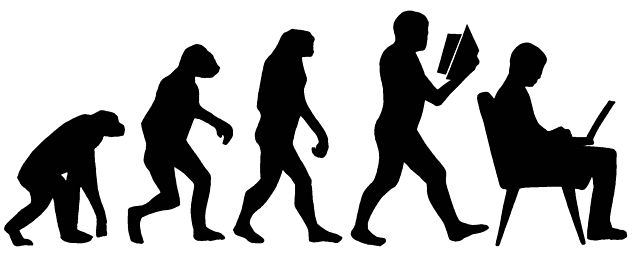
In face of this great diversity of views as to the manner of creation, there is, therefore, nothing inherently un-Jewish in the evolutionary conception of the origin and growth of forms of existence from the simple to the complex, and from the lowest to the highest. The Biblical account itself gives expression to the same general truth of gradual ascent from amorphous chaos to order, from inorganic to organic, from lifeless matter to vegetable, animal and man; insisting, however, that each stage is no product of chance, but is an act of Divine will, realizing the Divine purpose, and receiving the seal of the Divine approval. Such, likewise, is in effect the evolutionary position. Behind the orderly development of the universe there must be a Cause at once controlling and permeating the process. Allowing for all the evidence in favour of interpreting existence in terms of the evolutionary doctrine, there still remain facts—tremendous facts—to be explained: viz. the origin of life, mind, conscience, human personality. For each of these, we must look back to the Creative Omnipotence of the Eternal Spirit. Nor is that all. Instead of evolution ousting design and purpose from nature, ‘almost every detail is now found to have a purpose and a use’ (A. R. Wallace). In brief, evolution is conceivable only as the activity of a creative Mind purposing, by means of physical and biological laws, that wonderful organic development which has reached its climax in a being endowed with rational and moral faculties and capable of high ethical and spiritual achievement: in other words, as the activity of a supreme, directing Intelligence that has planned out, far back in the recesses of time, the ultimate goal of creation—‘last in production, first in thought’ [sof ma’aseh bemachshavah techilah]. Thus evolution, far from destroying the religious teaching of Gen. I, is its profound confirmation.
As a noted scientist well remarks:—
‘Slowly and by degrees, Science is being brought to recognize in the universe the existence of One Power, which is of no beginning and no end which existed before all things were formed, and will remain in its integrity when all is gone—the Source and Origin of all, in Itself beyond any conception or image that man can form and set up before his eye or mind. This sum total of the scientific discoveries of all lands and times is the approach of the world’s thought to our Adon Olam (Master of the World), the sublime chant by means of which the Jew has wrought and will further work the most momentous changes in the world’ (Haffkine).
Man is the goal and crown of creation—he is fundamentally distinguished from the lower creation, and is akin to the Divine. Man, modern scientists declare, is cousin to the anthropoid ape. But it is not so much the descent, as the ascent of man, which is decisive. Furthermore, it is not the resemblance, but the differences between man and the ape, that are of infinite importance. It is the differences between them that constitute the humanity of man, the God-likeness of man. The qualities that distinguish the lowest man from the highest brute make the differences between them differences in kind rather than in degree: so much so that, whatever man might have inherited from his animal ancestors, his advent can truly be spoken of as a specific Divine act, whereby a new being had arisen with God-like possibilities within him, and conscious of these God-like possibilities within him. Man is of God, declared Rabbi Akiba; and what is far more, he knows he is of God.
Nor is the Biblical account of the creation of man irreconcilable with the view that certain forms of organized being have been endowed with the capacity of developing in God’s good time and under the action of suitable environment, the attributes distinctive of man. ‘God formed man of the dust of the ground’ (Genesis II, 7). Whence that dust was taken is not, and cannot be of fundamental importance. Science holds that man was formed from the lower animals; are they not too ‘dust of the ground’? ‘And God said, Let the earth bring forth the living creature—this command, says the Midrash, includes Adam as well, Let the earth bring forth the living creature, living creature means the soul of Adam .
The thing that eternally matters is the breath of Divine and everlasting life that He breathed into the being coming from the dust. By virtue of that Divine impact, a new and distinctive creature made its appearance—man, dowered with an immortal soul. The sublime revelation of the unique worth and dignity of man, contained in Genesis I, 27 (‘And God created man in His own image, in, the image of God created He him’), may well be called the Magna Charta of humanity. Its purpose is not to explain the biological origins of the human race, but its spiritual kinship with God. There is much force in the view expressed by a modem thinker: ‘(The Bible) neither provides, nor, in the nature of things, could provide, faultless anticipations of sciences still unborn. If by a miracle it had provided them, without a miracle they could not have been understood’ (Balfour). And fully to grasp the eternal power and infinite beauty of these words—‘And God created man in His own image’—we need but compare them with the genealogy of man, condensed from the pages of one of the leading biologists of the age (Haeckel):—
‘Monera begat Amoeba, Amoeba begat Synamoebae, Synamoebae begat Ciliated Larva, Ciliated Larva begat Primeval Stomach Animals, Primeval Stomach Animals begat Gliding Worms, Gliding Worms begat Skull-less Animals, Skull-less Animals begat Single-nostrilled Animals, Single-nostrilled Animals begat Primeval Fish, Primeval Fish begat Mud-fish, Mud-fish begat Gilled Amphibians, Gilled Amphibians begat Tailed Amphibians, Tailed Amphibians begat Primary Mammals, Primary Mammals begat Pouched Animals, Pouched Animals begat Semi-Apes, Semi-Apes begat Tailed Apes, Tailed Apes begat Man-like Apes, Man-like Apes begat Ape-like Men, Ape-like Men begat Men.’
Let anyone who is disturbed by the fact that Scripture does not include the latest scientific doctrine, try to imagine such information provided in a Biblical chapter.
Judaism is optimism… No less than five times is the refrain, ‘And God saw that it was good’ repeated in the Creation Chapter. The world is not something hostile to God or independent of Him. All comes from God and all is His handiwork; all is in its essence good, nor is there anything absolutely evil. Israel acclaims God as the sole ‘King of the universe, who formest light and createst darkness, who makest peace and createst all things’ (Authorised Prayer Book, p. 37). Though Nature seems to be indifferent to man’s sense of compassion, the world is good, since goodness is its final aim: without struggle, there would be no natural selection or adaptation to changing surroundings, and therefore no progress from lower to higher. ‘And God saw everything that He had made, and, behold it was very good’—even suffering, evil, nay death itself, have a rightful and beneficent place in the Divine scheme, is the Rabbinic comment on this verse.
Hertz, J.H. (Ed.). The Pentateuch and Haftorahs: Hebrew Text, English Translation, and Commentary, 193–195. 1936
—————-
Chief Rabbi (of what was then British Mandatory Palestine) Abraham Isaac Kook ... did not see a belief in evolution as a challenge to religious belief: “Evolution itself, moving upwards coordinately and undeviatingly from the lowest to the highest, demonstrates most clearly a provision from afar, a preset purpose for all existence. Divine greatness is thereby enhanced and all the goals of faith confirmed, and trust and service of the Divine is all the more justified” (Orot ha-Kodesh, 565).
Great Britain’s chief rabbi Jonathan Sacks, a great devotee of the Rebbe but one who accepts the likelihood of evolution, comments on this passage of Rabbi Kook: “The idea that evolution shows that life emerged by chance does not impress the religious mind, which knows from many biblical examples that what appears to be random is in fact providential. The Book of Esther, like the story of Joseph, is a providential narrative in which everything happens at the right time in the right way to bring about the fated end, yet the word ‘God’ does not appear in the book, and the festival to which it gave rise, Purim, means lotteries or chance.” Rabbi Sacks cites a teaching of Malbim, the nineteenth-century Bible commentator, “There are things that appear [to have arisen by chance but are actually providentially determined by God” (commentary on Proverbs 16:33). In the same book, Rabbi Kook argued that there is no difficulty “in reconciling the verses of Torah or other traditional texts with an evolutionary standpoint” (Orot ha-Kodesh, 559). In making this assertion, Kook seems to have relied, at least in part, on a teaching of Maimonides, that “the account given in Scripture of the creation is not, as is generally believed, intended to be in all its parts literal” (see The Guide for the Perplexed, Book II, chapter 29 [Chicago: University of Chicago Press, 1974]; for a more comprehensive discussion of these issues, see also Jonathan Sacks, The Great Partnership. Science, Religion, and the Search for Meaning, 351-68, particularly 354 and 362-63 [New York: Schocken/ Random Houses 2011], from which the citations of Rabbi Kook are drawn).
- Footnote from Rebbe by Joseph Telushkin, 568-569
by Member of the Tribe
Posted in: Hot Topics
RELATED ARTICLES

RELATED MEDIA